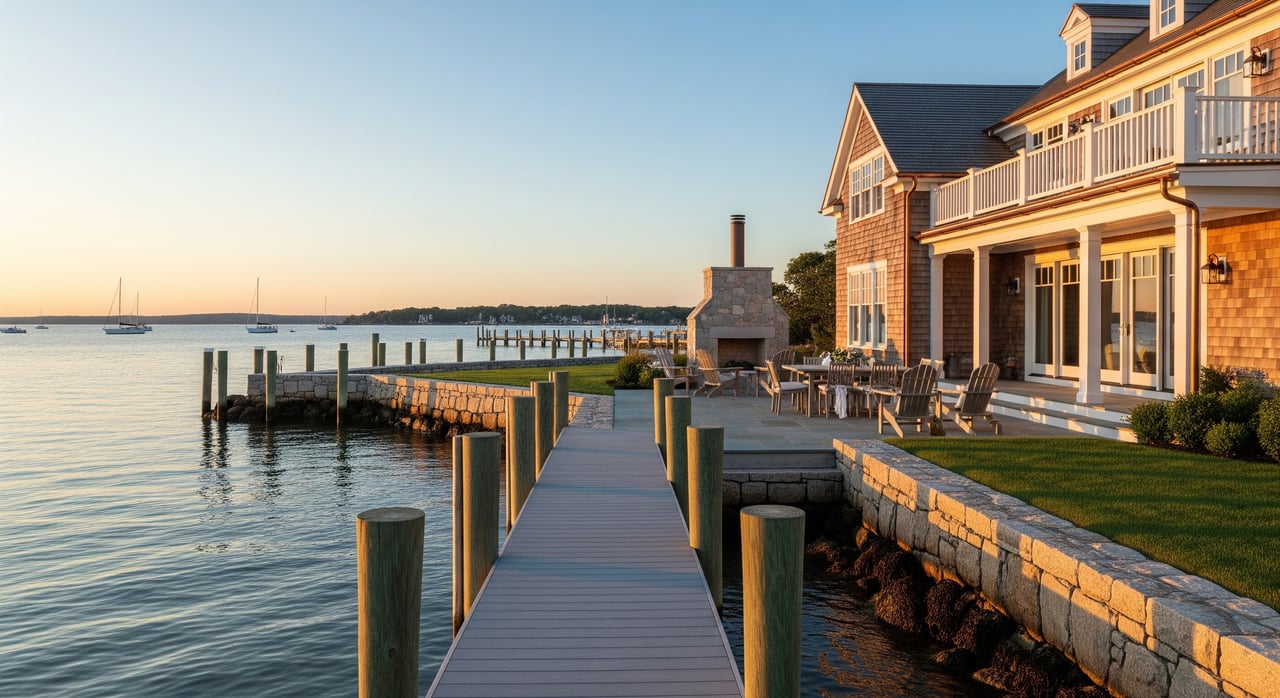
Sunrise over Narragansett Bay, coffee in hand, and the tide slowly rolling in. If you can picture that, you’re already halfway to imagining life on Barrington’s waterfront. You want the beauty and calm of the coast, but you also want to understand the day-to-day details that make it work. In this guide, you’ll learn what the lifestyle feels like, how the homes are built, and the practical steps to plan for insurance, maintenance, and permitting. Let’s dive in.
The Barrington waterfront setting
Barrington sits on the east side of Narragansett Bay with a long, varied shoreline. Some stretches are flatter with small beaches and coves, while others have rocky edges and gentle bluffs. Waterfront parcels range from cozy lots with docks to larger estates with sweeping views.
You’ll find a mostly residential, suburban feel along the water. There are no boardwalks or high-rise strips here. The shoreline is a mix of inlets, coves, and open-bay vistas that create quiet pockets and changing views throughout the day.
Daily life by the bay
The rhythm is relaxed and outdoor-focused. You see people paddling, sailing, or walking the shoreline when the weather warms, then settling into a quieter pace in winter. Neighbors tend to gather around parks, small beaches, and neighborhood access points.
Parks and paths
Many residents center daily routines on local parks and shoreline walks. You can enjoy scenic routes and easy access to the water without crowds. The East Bay Bike Path runs through the region and offers miles of biking and walking, so you can slip in a ride before dinner or take a weekend cruise along the Bay.
On-water lifestyle
Boating is a big part of waterfront living here. Residents use sailboats, powerboats, and kayaks, with moorings and private docks where available. Policies for moorings and launches are handled locally, so you’ll want to review current procedures and waitlists with the town harbormaster, which you can find through the Town of Barrington.
Architecture and home features
You’ll see classic New England styles like shingle homes, Colonial and Cape Cod cottages, renovated historic properties, and newer custom builds. Many homes are oriented toward the water with decks, porches, and big windows for sunset views.
Waterfront features can include docks or mooring access, seawalls or bulkheads, and sometimes elevated foundations in higher-risk zones. Upgrades that boost resilience, like storm-ready doors and elevated mechanicals, are common priorities for owners.
Commute and conveniences
Barrington is suburban, and most people commute by car to Providence or nearby East Bay towns. Daily errands are simple because shopping, dining, and services are clustered in town and along key corridors a short drive from the waterfront. T. F. Green in Warwick is the nearest major airport for domestic travel, while Boston Logan offers wider international options if you do not mind a longer drive.
Schools and youth programs
Barrington Public Schools are a community focal point and have historically performed well within Rhode Island. If schools are a priority for your move, check the latest state report cards for current metrics and boundary maps before you buy. Local recreation, sailing programs, and library activities offer a range of after-school and summer options.
What impacts value most
If you are comparing homes, a few factors tend to drive the premium on the water:
- Direct frontage and unobstructed views
- Dock, boathouse, or mooring rights with legal access
- Flood zone designation and the elevation of finished spaces
- Condition and resilience features, including seawalls or bulkheads
- Proximity to town amenities and typical commute times
Costs and risks to plan for
Waterfront living is special, but it comes with added responsibilities. Planning ahead helps you enjoy the lifestyle with fewer surprises.
Flooding and insurance
Coastal homes can face flooding from storms and higher tides. Many properties near the shoreline fall within FEMA Special Flood Hazard Areas, and lenders often require flood insurance for those homes. You can review a property’s current designation on the FEMA Flood Map Service Center.
Insurance is more nuanced on the coast. Standard homeowners policies typically exclude flood damage, and windstorm coverage may come with higher deductibles. Premiums vary based on elevation, prior claims, and mitigation upgrades. NOAA’s tide and sea-level resources can help you understand broader coastal trends as you evaluate risk.
Maintenance and resilience
Salt air accelerates wear. Expect more frequent paint and exterior finish upkeep, and watch for corrosion on metal fixtures and HVAC components. Docks, decks, and railings need consistent attention. Seawalls or bulkheads, where present, require periodic inspections and can be expensive to repair.
After major storms, it is smart to schedule professional assessments for docks, seawalls, and exterior systems. Budgeting for these items upfront makes long-term ownership smoother.
Permits and shoreline rules
Work that touches the shoreline usually requires multiple approvals. Docks, bulkheads, and similar projects are regulated by the town and the Rhode Island Coastal Resources Management Council (CRMC). Some projects also involve federal review. Start conversations early so you understand timelines and what is allowed on your lot.
Mooring rules and any waiting lists are typically managed by the town harbormaster. Private dock rights can vary by parcel, so verify what conveys with a specific property.
Sewer or septic
Some waterfront streets may be on municipal sewer while others use private septic. This affects maintenance, replacement planning, and what you can build. Confirm utility details with the town before you finalize an offer.
Is Barrington waterfront right for you?
If you value a quieter, residential waterfront with strong seasonal rhythms, Barrington may be a great fit. Families often appreciate the community focus and access to youth programs, while empty-nesters enjoy low-key coastal living with easy access to Providence. Second-home buyers tend to love the quick transition from weekday to weekend when the bay is your backyard.
How a local advisor helps
A skilled local agent helps you weigh lifestyle perks against the practical details. That means confirming flood zones, reviewing insurance implications with your lender, and checking mooring or dock possibilities with the town. It also means spotting resilience upgrades, understanding permitting paths, and assessing long-term maintenance.
If Barrington’s waterfront is calling your name, connect with a trusted local who pairs neighborhood knowledge with clear financing guidance. Reach out to Alicia Cotter Reynolds to talk through your goals and next steps.
FAQs
How does Barrington waterfront living feel day to day?
- Expect a calm, residential vibe with outdoor routines centered on walking, biking, boating, and changing seasonal rhythms.
What should I know about flood risk in Barrington?
- Some parcels sit in FEMA flood zones; review maps on the FEMA Flood Map Service Center and discuss insurance requirements with your lender and insurer.
Can I add a dock to a Barrington waterfront lot?
- It depends on your parcel and approvals; shoreline projects usually need town permits and CRMC review, so start early to confirm feasibility.
Are there public parks or paths on the water?
- Yes, Barrington offers shoreline parks and access points, and the regional bike path runs through the area, making casual rides and walks easy.
How does insurance differ for waterfront homes?
- Flood is typically a separate policy, and coastal wind coverage can carry higher deductibles; costs vary by elevation, claims history, and mitigation.
What home features matter most for value on the water?
- Direct frontage, clear views, legal access to boating, flood zone and elevation, and strong resilience features influence value the most.