"The homestead exemption or owner-occupied rate attaches to the owner(s) of the real property not to the real property itself."
That line comes from Providence's tax ordinance. If you're shopping for a two- or three-family in the city, it may matter more than anything else you read before you make an offer. The tax bill in the listing is the seller's bill, worked out at the seller's rate, and it reflects the seller's situation. When the deed changes hands, the rate can change too. In Providence that change is big enough to affect whether a building pencils out at all.
The Rate Belongs to Whoever Holds the Deed
For FY2026, Providence taxed residential property at six rates per $1,000 of assessed value. An owner-occupied 2–5 family was $7.55, the same building without an owner living in it was $14.00, and buildings with 6–10 units were $26.00. Those rates still apply. The city's adopted FY2027 budget says it "does not change any residential, commercial or tangible-property tax rate or exemption."
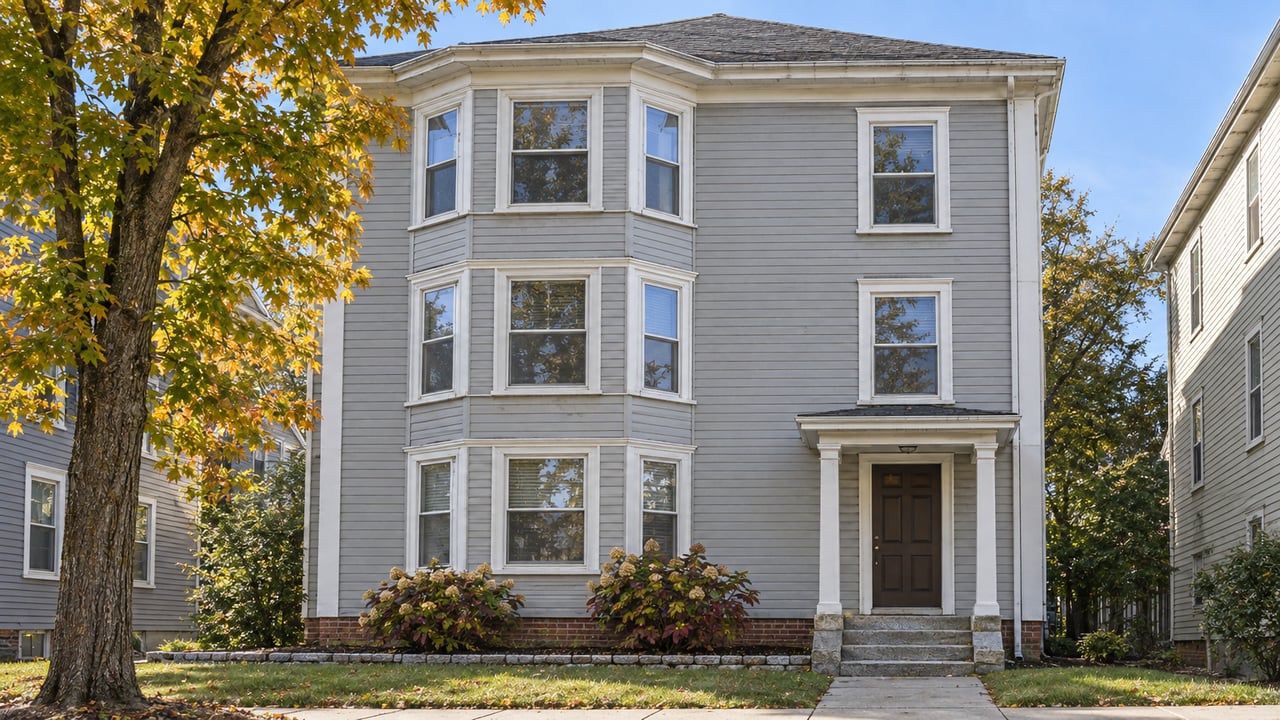
To see what the rate does to one building, take a hypothetical property assessed at $600,000. That's an example, not a real listing. A Providence assessment is not the same as a sale price, so check the actual assessed value of any building you're looking at.
| Who owns it and how it's used | FY2026 rate per $1,000 | Annual city tax on a $600,000 assessment |
|---|---|---|
| Owner-occupied single-family | $8.40 | $5,040 |
| Owner-occupied 2–5 family | $7.55 | $4,530 |
| Non-owner-occupied 2–5 family | $14.00 | $8,400 |
| 6–10 dwelling units | $26.00 | $15,600 |
On that same building, the gap between an owner-occupant and an investor is $3,870 a year, about $322 a month. In July 2026, GoLocalProv reported a $2,200 median two-bedroom rent in Providence, citing the Zumper National Rent Index. At that rent, the tax gap is a little under two months of rent from one unit every year. An investor needs that income just to match what an owner-occupant would pay for the identical building.
The table also shows that an owner-occupied two- or three-family carries a lower rate than an owner-occupied single-family home. A first-time buyer financing a triple-decker with plans to live in one unit gets the lowest residential rate in the city. Someone buying the same building as a rental pays nearly double.
Why the Gap Is So Wide
The current rates were set in June 2025. The mayor's first FY2026 proposal would have raised the average tax bill on owner-occupied 2–5 unit homes by 16%. City Council President Rachel Miller and Finance Chairwoman Helen Anthony negotiated a deal with Mayor Brett Smiley that brought the average increase for that class down to 6%. Under the same deal, non-owner-occupied 2–5 unit buildings saw an average increase of 13%.
"Revaluations are sky high, and Providence is making up for decades of underfunding schools in just one year," Miller said when the agreement was announced. The Council described the change as relief for the "mom and pop" landlords who live in their duplexes and triple-deckers. Investor-owned buildings of the same size didn't get the same relief. That was a policy decision, and the spread it created is still in the rate table today.
Closing Is When the Rate Changes Hands
Because the rate follows the owner, every sale reopens the question. Here is how the ordinance handles it:
- The seller's benefit stops at the sale. If the property sells partway through the year, the owner-occupied rate is removed for the rest of that year unless the new buyer applies and is approved.
- A buyer who moves in doesn't have to wait a year. A new owner can apply for the owner-occupied rate from the date of purchase for the current tax year, even without owning the property on the prior December 31. The benefit is prorated by the number of days owned.
- The normal cycle runs from December 31 to March 15. The owner-occupied rate is tied to the December 31 assessment date, and the application is due to the City Assessor by March 15. It has to include a sworn declaration and proof of residency and ownership. The Assessor's online Owner Occupied Certification asks for a Rhode Island license, state ID or City ID, plus a recent bank statement, mortgage statement, paystub or formal government document.
- The buyer is responsible for any discount wrongly kept after closing. The ordinance says the buyer or transferee is liable to the city "for any tax benefit wrongfully received after the date of sale or transfer."
The fourth point is where an investor buyer can get caught. Say an investor buys from an owner-occupant whose current bill was calculated at $7.55. Under the ordinance, the owner-occupied rate comes off for the part of the year after the sale unless the new owner applies and is approved, and the buyer is liable for any benefit wrongly received after the transfer. So an investor who takes over that bill without checking it may end up owing the difference at the investor rate. The Providence Collector's office says the buyer's and seller's shares are figured as of the sale date and settled from the proceeds at closing, and it sends parties to the closing documents or the closing attorney for the exact numbers. Ask your attorney which rate the proration uses, and whether it should be adjusted to the rate that will actually apply to you.
Timing matters as well. Providence's fiscal year runs July 1 to June 30, and taxes are paid in quarterly installments due July 24, October 24, January 24 and April 24. A buyer closing this fall is coming in just before the October installment.
Who Can't Claim the Lower Rate
The ordinance is specific about who qualifies. Each of these rules affects how a buyer should structure a purchase:
- Only individual people qualify. A property owned in whole or in part by a business, institution, nonprofit or other entity isn't eligible. If you buy through an LLC, you give up the $7.55 rate even if you live on the second floor. There's a narrow exception the Assessor can grant for good cause, when the entity holds title solely for estate purposes and the owner lived in the property on the assessment date.
- Each owner gets one owner-occupied rate. You can't claim it if you or your spouse already receive a homestead exemption or owner-occupied rate on another property anywhere in Rhode Island or any other state for the same period, unless you're legally separated or divorced. A couple keeping a house in another town while one of them lives in a Providence three-family should plan around this rule.
- Unpaid housing court judgments block the application. The Assessor will deny the owner-occupied rate if there's an unsatisfied execution of record from a housing court judgment for code violations against the applicant.
- Errors can lead to back taxes. If the information on the application turns out to be wrong, "knowingly or not," the Assessor can remove the rate and charge back taxes up to the full amount owed. Knowingly false information can also bring maximum interest.
Two Policies That Don't Change This Math
Two items in this year's news can look like they'd change the carrying cost of a Providence two-family. For most buildings, neither one does.
Rhode Island's Non-Owner Occupied Property Tax took effect July 1, 2026. It applies only to qualifying residential property assessed above $1 million, at $2.50 per $500 of value above that threshold, and it exempts qualifying long-term rentals under written leases of at least 183 days. The Division of Taxation also says a multifamily property isn't subject to the tax if one unit is owner-occupied or a unit qualifies for an exemption.
Rent stabilization is also off the table for now. The City Council passed a rent stabilization ordinance on April 16, 2026. Mayor Smiley vetoed it the next day, and the override attempt failed on May 15. For the buildings this post is about, the city's investor rate is still the biggest tax difference between owner-occupant and investor buyers.
Every landlord, owner-occupant or not, still has to register with the state's rental registry within 30 days of buying or leasing, and confirm the registration every year by October 1.
What This Fall's Market Means for the Gap
Rhode Island's statewide median sale price for 2–4 family homes was $607,500 in August 2026, up 4.74% from August 2025. Days on market rose to 38 from 28 a year earlier, and active listings rose 15.95% to 429. These are statewide figures. No Providence-only multifamily breakdown for that month was available.
With more listings and longer days on market, buyers have more room to ask questions before they sign. An owner-occupant buyer can use the $7.55 rate to support a higher offer than an investor can make on the same building. An investor needs to underwrite at $14.00 from closing day, whatever the seller's bill says. Either way, run the numbers using the rate you'll actually pay, not the seller's.
Quick Answers
Can I get the owner-occupied rate on a building with six units? No. That rate covers 1–5 family homes. Buildings with 6–10 units are taxed at $26.00, and 11 or more units at $28.50.
I'm closing in November and moving in. Do I pay the investor rate until next year? Under the ordinance you can apply for the owner-occupied rate from your purchase date, prorated for the days you own the property. You still have to apply and be approved.
Is this tax advice? No. It's a summary of how the city's published rules work. Confirm your parcel's classification with the Assessor, and talk to your closing attorney about prorations.
Before I spent years in real estate, I spent years as a mortgage lender, and carrying cost on a two-family is where those two jobs meet. If you're comparing a Providence triple-decker as a home you'll live in versus a rental, I'm glad to run both versions of the numbers with you before you write an offer. Reach out to Alicia Reynolds and let's connect.