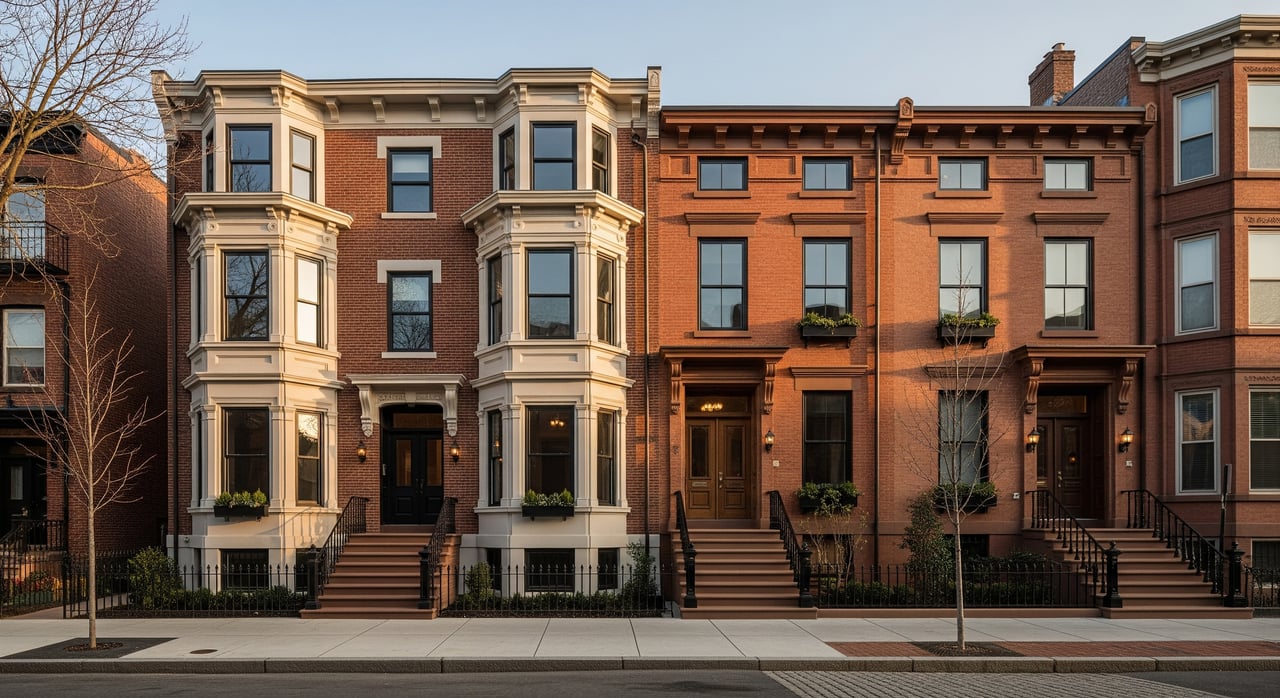
Thinking about buying a duplex or a triplex in Providence, but not sure which one fits your goals? You’re not alone. Small multifamily buildings can be smart wealth builders, yet the details around rents, financing, and management can change your outcome. In this guide, you’ll compare the strengths of duplexes and triplexes, see how financing and underwriting work for each, and learn the local checks that matter in Providence. Let’s dive in.
Providence rental demand at a glance
Providence supports consistent rental demand from higher-education institutions and employment hubs. Brown University, RISD, Providence College, and local URI programs help drive steady leasing near campuses. Hospitals, health services, state government, and small businesses add demand from young professionals and service workers.
Neighborhood micro-markets
Rents, vacancy, and tenant profiles vary by neighborhood. The East Side, Elmwood, Federal Hill, the West End, and South Providence all show different risk and return patterns. Before you underwrite a deal, compare recent sales comps and rent levels within the same neighborhood, not just citywide averages.
What to confirm before underwriting
- Recent 2 to 4 unit comps and cap rate ranges in the immediate area.
- Typical vacancy and seasonality. Expect turnover to cluster around May or June in student-heavy zones.
- Rent growth trends and any local legislative changes that may affect rent increases or eviction timelines.
- Typical tenant profiles by block or area so you can match the unit mix to demand.
Duplex vs triplex: quick compare
Both options can work in Providence. Your choice depends on budget, risk tolerance, and management style.
- Triplex advantages: greater rent diversification, usually higher gross income on a similar footprint, and more resilience to a single vacancy.
- Duplex advantages: lower purchase price, simpler operations, and it can be easier to owner-occupy one unit for more favorable residential loan terms.
Vacancy resilience
- Duplex: one vacant unit can drop gross rent by about 50 percent.
- Triplex: one vacant unit typically reduces gross rent by about 33 percent.
If your cash flow is tight, that extra cushion in a triplex can help.
Management complexity
More units mean more leases to track, more maintenance events, and potentially more turnover. Unit mix matters. Smaller units near campuses may turn faster than larger apartments that appeal to longer-term renters. Shared systems like a single boiler can complicate billing and outages. Separating utilities can reduce conflict but adds capital cost.
Financing options for 2 and 3 units
For 2 to 4 unit properties, you can often choose owner-occupant or investment financing. Terms vary by lender and program.
- Owner-occupant residential programs
- FHA for 1 to 4 unit owner-occupied properties. Low down payment programs may be available. Confirm current rules and any lender overlays.
- Conventional owner-occupied programs through Fannie Mae or Freddie Mac. Down payment and underwriting vary by lender and by unit count.
- Investment loans
- Conventional investment mortgages or portfolio loans generally require higher down payments and stricter debt service and credit standards.
- DSCR or bank portfolio products focus on property cash flow rather than personal income. These are common for non-owner investors.
- Commercial lending
- Some lenders may treat 3 plus units as commercial, even if others do not. That can mean different covenants, larger down payments, and shorter amortization.
- Rehab and value-add financing
- FHA 203(k) for owner-occupants and various construction or rehab products for investors can fund improvements. Also check for local rehab grants or loans.
Down payment and terms to clarify
- Required occupancy for owner-occupant loans and how long you must live there.
- Minimum down payment, loan-to-value limits, and cash reserve requirements by unit count.
- DSCR requirements for investment loans and how the lender sizes income, vacancy, and expenses.
- Whether property condition, mixed-use elements, or non-conforming units affect eligibility.
Action steps with local lenders
- Collect quotes from several community banks, credit unions, and mortgage brokers in Providence.
- Ask for their specific terms for 2 units versus 3 units, including interest rates, points, reserve requirements, and DSCR.
- Confirm whether separate meters, shared systems, or code issues will change loan terms.
Build your Providence pro forma
Use a simple model to compare a duplex and a triplex with the same underwriting logic. Replace placeholders with Providence comps, property tax bills, insurance quotes, and realistic repair budgets.
Key formulas:
- Gross Scheduled Income = sum of all unit market rents plus ancillary income
- Vacancy and credit loss = GSI times vacancy rate
- Effective Gross Income = GSI minus vacancy loss
- Operating Expenses = taxes plus insurance plus owner-paid utilities plus repairs and maintenance plus management plus reserves and other line items
- Net Operating Income = EGI minus Operating Expenses
- Debt Service = annual mortgage payments
- Cash Flow Before Tax = NOI minus Debt Service
- Cap Rate = NOI divided by Purchase Price
- Cash-on-Cash = Cash Flow divided by Total Cash Invested
- GRM = Purchase Price divided by GSI
- DSCR = NOI divided by Debt Service
Illustrative side-by-side example
These numbers are placeholders to show the math. Use local rents, taxes, and insurance.
- Purchase price: Duplex 300,000. Triplex 420,000.
- Monthly gross scheduled rent: Duplex 2,200. Triplex 3,100.
- Vacancy rate: 7 percent.
- Operating expenses: 40 percent of EGI for an older, owner-managed building. Adjust for actuals.
- Management fee: 8 percent of EGI if you hire a manager.
- Loan: 75 percent LTV, 30-year amortization at a market rate from your chosen lender.
- Rehab and reserves: 5,000 per unit upfront. Annual reserves 300 per unit.
Calculation steps:
- Annual GSI: multiply monthly total by 12.
- Vacancy loss: GSI times 7 percent.
- EGI: GSI minus vacancy loss.
- Operating expenses: either 40 percent of EGI or a detailed sum by line item.
- NOI: EGI minus operating expenses.
- Annual debt service: based on loan amount, rate, and amortization.
- Cash flow: NOI minus debt service.
- Total cash invested: down payment plus closing costs plus rehab.
- Cash-on-cash: cash flow divided by total cash invested.
What to localize for Providence
- Market rents by unit type and bedroom count in the specific neighborhood.
- Property taxes from the City of Providence assessor and any reassessment risk.
- Insurance quotes for landlord coverage, especially for older buildings or properties near potential flood zones.
- Utility responsibility and metering. Tenant-paid utilities can materially shift expenses.
- Realistic maintenance and capex schedules for roofs, boilers, and porches based on age and condition.
Sensitivity tests to run
- Increase vacancy by 5 percentage points to see stress on DSCR.
- Add a roof or boiler replacement in year 2 to test reserves.
- Model rent increases needed to reach a target cap rate or cash-on-cash return.
- Test a refinance after value-add improvements.
Underwriting checklist for Providence
Use this to avoid surprises before you make an offer.
Income and rent-roll
- Current rents under signed leases compared to market rents.
- Lease expirations and turnover timing, especially for student-oriented leases ending in late spring.
- Who pays which utilities and whether gas, electric, and water are separately metered.
- Ancillary income potential from parking, laundry, or storage.
Expenses
- Property taxes, including current bills, abatements, and reassessment risk.
- Insurance for landlord coverage. Consider building age and flood risk.
- Maintenance and repair needs for roof, heating system, hot water, plumbing, electrical, foundation, and exterior.
- Capital expenditure plan and reserve budget per unit based on condition.
- Management costs. Professional management for small multifamily often runs 6 to 10 percent of effective gross income.
Legal and regulatory
- Zoning and unit legality with the City of Providence.
- Certificate of Occupancy or rental registration, code compliance, and any open violations.
- Lead paint compliance for pre-1978 buildings and required disclosures.
- Rhode Island landlord-tenant rules and any Providence-specific protections that affect rent increases or eviction timelines.
- Any rent control proposals or moratoria that could change your business plan.
Physical and environmental
- Flood zone and FEMA mapping for insurance needs.
- Signs of asbestos, mold, or other environmental issues common in older structures.
- Parking layout and any neighborhood permit rules.
Title, survey, and access
- Title search for liens and easements.
- Survey or site plan confirming ingress and egress for each unit and parking.
Market comps and exit
- Recent neighborhood sales for 2 and 3 unit properties, adjusted for unit mix and condition.
- Typical cap rates and GRMs in the submarket.
- Likely buyer pool at exit. Owner-occupant purchasers often drive values in the 2 to 4 unit segment.
Value-add strategies that work locally
Revenue lift
- Targeted kitchen and bath updates, new flooring, paint, and fixtures to reach market rent.
- In-unit laundry and improved heating controls where rent-justified.
- Reposition unit mix to better fit neighborhood demand if allowed by code.
Expense control
- Shift utilities to tenant-paid where metering and lease structure permit.
- Energy upgrades such as insulation and efficient boilers.
- Smart metering where permitted to align consumption with responsibility.
Constraints to plan for
- Zoning and historic district rules may limit exterior changes and reconfiguration.
- Tenant protections and eviction timelines can slow projects that require vacancy.
- Labor, permits, and materials drive budgets in Providence. Use firm contractor bids.
- Renovations can trigger reassessment and higher property taxes.
Which is right for you?
Use these common investor profiles to guide your choice.
- First-time house hacker: If you plan to live in one unit and want the simplest path to ownership, a duplex can pair well with owner-occupant financing and a manageable workload.
- Cash flow with cushion: If your goal is steadier income with less impact from a single vacancy, a triplex offers an extra income stream and better diversification.
- Value-add buyer: If you have the budget and team for renovations, the project with the bigger post-renovation rent lift wins. In many micro-markets, that can be a triplex due to the additional unit, but verify zoning, rents, and capex first.
- Remote owner with property management: If you will hire a manager, compare management quotes for both options. The per-unit cost can decline with more units under one roof, which can favor a triplex.
Next steps in Providence
- Pull recent comps for 2 and 3 unit buildings within the same neighborhood for the last 6 to 12 months.
- Get the assessor’s parcel record for current taxes and assessed value.
- Check permits and code history with the Providence Building Inspection Department.
- Confirm zoning and allowable uses with Providence Planning.
- Order a market rent survey and a thorough inspection to quantify deferred maintenance.
- Speak with multiple lenders about terms for 2 units versus 3 units, including owner-occupant and DSCR options.
- Line up a property manager for rent and expense estimates, even if you plan to self-manage at first.
When you want a clear, numbers-forward plan tailored to your goals, you deserve a local guide who speaks both neighborhood and finance. With a background in mortgage lending and deep Rhode Island roots, Alicia helps you compare financing, model cash flow, and source the right duplex or triplex for your strategy. Have questions or want to see on-market and off-market options? Connect with Alicia Cotter Reynolds to plan your next move.
FAQs
How do financing rules differ between duplex and triplex purchases in Providence?
- Both are often eligible for owner-occupant programs, but down payment, reserves, and underwriting can change by unit count and lender, while investment and DSCR loans focus on property cash flow.
What vacancy rate should I underwrite near Providence campuses?
- Start with a baseline then test higher vacancy to account for student turnover, which often peaks in late spring, and adjust to neighborhood and unit mix.
Do I need separate utility meters for a small multifamily in Providence?
- You do not need them in every case, but separate metering can reduce owner-paid utilities and tenant disputes, while shared systems can complicate billing and risk outages.
How do Providence property taxes affect returns on duplexes and triplexes?
- Taxes are a major expense line, so review current bills, check for abatements, and model potential reassessment after renovations since higher assessments can reduce cash flow.
Is a triplex harder to manage than a duplex for a new investor?
- A triplex adds leases and maintenance events, but it also diversifies income, so weigh the added admin against the stability of three rents and consider professional management if needed.